Translate

Friday, 7 March 2014

MIFUKO - Finnish design made in Kenya


Good news! Social entrepreneurship - businesses with a cause - is rising in Finland. According to 'The association of Finnish Work' social business in Finland has grown from about 150 in 2010 to thousands in 2014. One great example of a Finnish social business is MIFUKO - a fair-trade company designing African-inspired eco-friendly objects made by Kenyan artists.

Mifuko was founded in 2009 by designers Minna Impiö and Mari Martikainen, who runs the business from Nairobi and Helsinki. By being situated on place, Mifuko makes sure the artists receive a regular income and good working conditions. As an example their baskets are made by women groups in rural villages and the wages go to food, education and medicine for their families. Mifuko makes bags, baskets, sandals and jewellery etc. What I like about their products is the mix of African ethnicity and Finnish simplicity.They also strive to use recycled and organic materials when ever possible. 
Mifuko has recieved the Finnish Social Enterprise Mark, a symbol of certified social entrepreneurs for their fair-trade work. Read more about their business on MIFUKO.FI and visit their web-shop for a taste of Finnish-African design.  


photos: Mifuko

Saturday, 1 March 2014

SISTERS OF SIDEMEN

Last week our journey continued to Sidemen to meet up with a group of weavers. Sidemen is an agricultural village in central Bali surrounded by stunning mountain and rice field views, well known for it's long weaving tradition. The friendly locals, still not used to many tourists, made us feel right at home. The otherwise quiet village, was during our stay in full preparation for a major and rare religious ceremony (hold only once every 40 years) which we were lucky to be part of. The Balinese people's dedication to their religion as well as the detailed decorations and offerings left a deep impression.

 the view from our lovely home stay Giri Carik

on the way to the temple


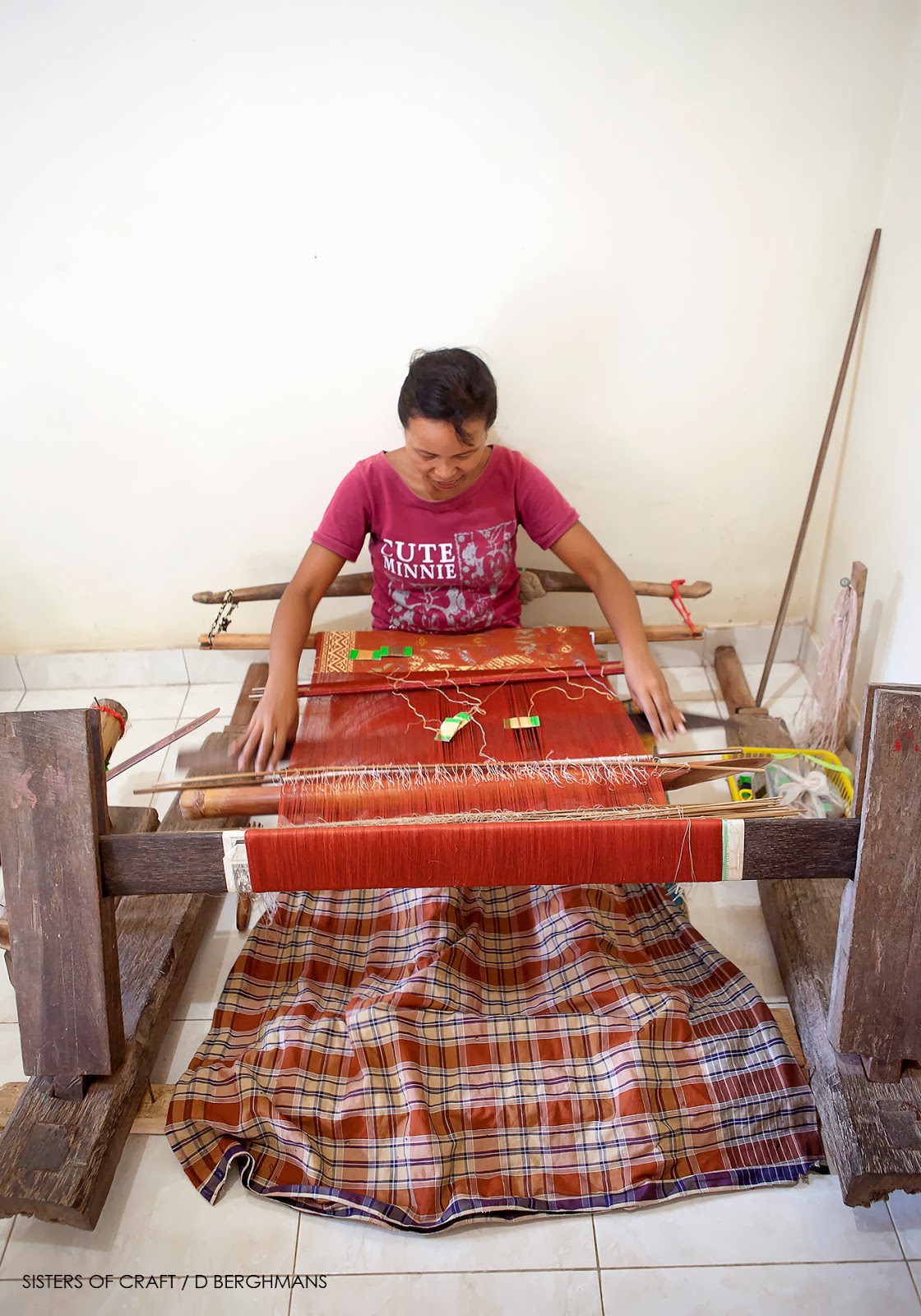
The meetings with the local weavers gave us a good insight into the Songket and Bebali woven textiles famous for the area. The traditional weaving is done with primitive back strap looms using natural dyed cotton or silk threads. The dyes are mainly made from bark, roots and plants and the complicated motives all have a traditional and symbolic meaning.

The technical skills and patience these women possess are simply admirable. One textile, from dying to weaving, usually takes months to finish, which naturally makes the prices fairly high. To meet the demand for cheaper textiles, chemical dying and "ordinary" weaving are commonly used. However the women in the group all prefer the natural dyed textiles for their authenticity, quality and beautifully muted colors. Increased marketing and awareness of the cultural value of naturally made textiles allows the women to continue their patient work in keeping the traditional weaving skills alive. 

naturally died silk

 traditional spinning rock

bebali - 'sacred textile', only used in religious ceremonies

 back strap loom / songket weaving


 songket - mainly used as sarong and decorative object


the weavers wearing their textiles


Friday, 28 February 2014

WILD CHAIRY


By making conscious choices when it comes to consumption and collaboration we can make difference for people and societies throughout the globe. Here's one great example of a fair-trade collaboration; Andrea Mihalik, chair designer and owner of WILD CHAIRY in New Jersey, cooperating with a group of craftswomen in a small maasai village in Kenya creating truly unique chairs.  Profit of the income will support education for the women in the village. Inspiring work!


Watch the film clip here: Weaving Connections


Monday, 24 February 2014

UBUD, BALI - A PLACE OF INSPIRATION

Greetings from Ubud, the cultural centre for arts and crafts in Bali. We spent an amazing week strolling along the small streets, soaking in the vivid, colorful and spiritual atmosphere of this place, while preparing for the meetings with the women craft cooperatives in Sidemen and Seraya. Many thanks to THREADS OF LIFE, for getting us in contact with the women and helping out with practical issues, like translating and accommodation. More about Threads of Life to come; a Fair-Trade Textile Arts Centre working for the sustainability of Indonesian textiles.

The Balinese craftmanship is all around; in amazing wood and stone carvings, piles of baskets, precious temple offerings and colorful woven sarongs. The friendly Balinese people welcomed us with their smiles and delicious food, offering a glimpse into their homes and religious ceremonies. 
A true experience for all senses...


Monday, 17 February 2014

ETHNICAL EYEWEAR

What a great initiative! In this Ethnical Eyewear Campaign by New Zeeland designer Karen Walker the Kenyan artisans making the eyewear also are employed as models. The campaign is part of United Nations - Ethnical Fashion Initiative which promotes sustainable development over aid, with the motto "NOT CHARITY, JUST WORK". According to Walker the campaign offers "a glimse into the world that the work is coming from"and "the images help to bring visability to how fashion can be a vital vehicle out of poverty".


Introducing KAREN WALKER VISIBLE, our new campaign that aims to highlight, celebrate and acknowledge.

This season Karen Walker is working with the United Nations’ ITC Ethical Fashion Initiative to create work in community groups of micro-artisans located in urban slums and disadvantaged rural areas of Kenya. The Ethical Fashion Initiative's motto is NOT CHARITY, JUST WORK and their task is to promote sustainable business over aid dependency. The Initiative enables marginalized artisans to increase their skills, to enter the international fashion chain in a fair way and to produce directly for brands that distribute products worldwide.

Karen Walker and the artisans of the Ethical Fashion Initiative are working together to produce pouches for the latest Karen Walker Eyewear collection. The simple, screen-printed pouches will come with every pair of Karen Walker Eyewear from this new collection. In addition, more elaborate and embellished versions, also made by Kenyan artisan groups, will be available to buy separately.

Taking the project a step further, it is the artisans themselves who are the stars of this season’s campaign. The people photographed here include machinists, cutters, tailors, production managers and metal workers who have acquired or refined craft and management skills through the Ethical Fashion Initiative. For the Maasai artisans, to whom intricate beading is a tradition, connecting to the fashion world through the Initiative brings a vital source of income. Photographed by Derek Henderson, our photos allow a glimpse into the world that the work is coming from.

The campaign captures our innate optimism, our love of maximum-impact in the images themselves and also directs attention to Kenya in a positive way. In short, the images help to bring visibility to how fashion can be a vital vehicle out of poverty.

The Karen Walker Visible collection will be available in all Karen Walker stores and worldwide from February 10, 2014. Stay tuned!   

(https://www.facebook.com/pages/Karen-Walker-Eyewear/229559920387602?fref=ts)

KAREN WALKER ETHNICAL EYEWEAR

Sunday, 16 February 2014

Celebrating Indigenous Art and Culture

Last week we headed south to participate in the Melbourne Indigenous Arts Festival, a celebration of Aboriginal and Torres Strait Islander arts and culture. The festival presents a colorful selection of visual arts, music, theatre, dance, film and and lectures, of which most events are free. The week-long festival is held around Federation Square in the centre of Melbourne; one of the greatest multicultural cities in the world. A true cultural experience for all senses that gave new contacts and inspiration for our project. Melbourne Indigenous Arts Festival


Indigenous musicians playing at Federation Square, among others Jessica Mauboy, a young upcoming Aboriginal singer and actress. jessicamauboy.com.au


"Ghost Net Weavers" is an inspiring art and environmental community project where indigenous artists from remote areas create works of art from cast-off fishing nets collected from waters and beaches in the Northern Territory. Ghost nets are lost or abandoned fishing nets from Indonesian fishing waters, creating a huge threat to the marine wildlife in Northern Australia, killing fish, turtles and corals. The Ghost Net Weavers want to raise awareness of this environmental issue by turning plastic rubbish into colorful pieces of recycled art. Great initiative!
www.ghostnets.com.au


KOORIOBOREE presented traditional dances and storytelling from the Koorie culture around Victoria. An amazing experience of aboriginal culture right in the centre of Melbourne - the land of their ancestors. 


Cute Koori kids following the footsteps of their parents and ancestors. 


Wednesday, 5 February 2014

Sisters of Matemwe

The challenge in a project like this one, is that plans change and ideas develop, but that's also what makes it all so exciting.

SISTERS OF CRAFT started with a work scholar ship from the Swedish Cultural Foundation in Finland with a project trip to Tanzania to compare textile craft manship among Finnish and African women. But thanks to the people we have met and the opportunities that have arisen along the way, we realized that the project could be so much wider by including several cultures and women craft cooperatives. And we're still on that journey, letting our interest for woman craftmanship lead the project in the direction it's evolving. And by doing so the work becomes even more meaningful and exciting than we ever imagined.

Let's begin with Tanzania where it all started...
In the historical town 'Stown Town' in Zanzibar, Khamis Rashid and his Finnish wife Aino Tanhua run COLORS OF ZANZIBAR, a small and personal tourism company offering customized tours and holidays in Zanzibar and surroundings. They are working for sustainable and ecological tourism (low impact on the environment, high income to the locals). By offering ecological accommodation, cultural visits to villages, working with local guides, companies and organizations supporting sustainable tourism they want to make sure local communities get a fair share of the tourism business.

To help improve the Zanzibari womens' situation, Colors of Zanzibar started ZEDIO (Zanzibar Educational Improvement Organisation) and are now running a pilot project about women craftmanship in a small fishing village in northern Zanzibar. The aim of the project is to help a group of young women develop their craft products and skills in business and English. Working together with Farouque Abdela, one of the most well-known fashion designers in East Africa, the aim is to develop unique ukili-products as an alternative to the traditional woven baskets and interior products. And that's how we came in contact with the Sisters of Matemwe.


We had a two day inspiring workshop with the women, learning about their craft culture and ways of living as well as the basic skills of ukili-weaving. Weaving is a natural part of their daily lives and the skills are passed down from mother to daughter. Through their craft they get a small but significant income. The women, all in their 20's were muslim, and fasting at the time since it was Ramadan. This meant for example no food or drinks between sunrise and sunset, which was a challenge in it self in 30+ degrees. They were curious about us and our countries having many questions, like how come I was not married by the age of 36! By showing them images of Finnish craft, they got a glimpse into an other world, so completely different. Very proud they showed us their village and introduced us to their families. More than ever we wished we'd studied some swahili before we arrived. When we asked to take their portraits, they shyly posed in front of the camera and giggled when they saw themselves on the camera screen. In return we sent them a photo album showcasing their work and products, to use when marketing their craft.


The meeting with the women left a big impression, making us realize the challenges these women meet. But at the same time their dedication to the work and willingness to learn, gave us hope and inspiration to take our project further. The women are now learning English and business skills thanks to a group of Finnish volunteers. ZEDIO is open for volunteers within handicraft, design, and product marketing to participate in the project. More information about Colors of Zanzibar and Zedio can be found at http://www.colorsofzanzibar.com/.

Since a few months we're based in Darwin, northern Australia, where Dieter has been living on and of for the last 9 years, working as a nurse in the operating theatre along with pursuing his passion for photography. It's here that we've come in contact with Aboriginal and Balinese women craft cooperatives which we are working with right now. Currently we're in Melbourne participating in the Melbourne Indigenous Arts Festival - mainly showcasing aboriginal art and culture. But more about that to come...